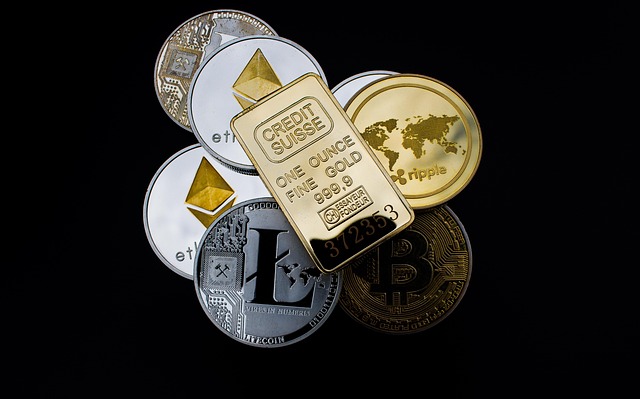
Let’s talk about gold. That beautiful, dense, and utterly seductive metal that has caused more trouble throughout history than a reality TV star at a family reunion. From King Midas to James Bond villains, everyone seems to want it. But is it a brilliant, timeless safe haven for your hard-earned cash, or is it just a shiny rock we’ve all collectively agreed is valuable?
Pull up a chair. Let’s dissect the allure, the strategies, and the downright oddities of putting your money into the element Au.
Part 1: The Siren’s Song – Why We’re All Drawn to the Glitter
First, let’s acknowledge the primal appeal. Gold isn’t some abstract concept like a stock ticker or a cryptocurrency wallet. You can hold it. It’s heavy. It feels like money in a way that a digital bank statement never will.
The “Barbarian” Mentality: Famed investor Warren Buffett famously quipped that gold gets dug out of the ground in one continent, only to be transported and buried again in another vault. He has a point. Yet, the “barbarian relic” argument misses a key psychological element: when the zombie apocalypse comes (or, less dramatically, when inflation goes bonkers), people don’t run to their stock portfolios. They dream of a lockbox full of gold coins. It’s the ultimate “break glass in case of emergency” asset.
The Drama Queen of Assets: If the S&P 500 is a reliable, steady-going friend, gold is the dramatic, enigmatic acquaintance who shows up at your party wearing a cape. It can sit around doing nothing for years, lulling you into a sense of boredom, and then suddenly spike 30% during a geopolitical crisis, making you look like a genius. Its value is less about intrinsic utility (you can’t eat it) and more about collective fear and desire. It’s the ultimate mood ring for the global economy.
Part 2: Your Golden Toolkit – How to Actually Own the Stuff
So, you’re convinced you need a little glitter in your life. How do you get it? You have more options than a billionaire at a supercar showroom.
1. The Pirate’s Method: Physical Gold
This is for the true romantics,the doomsday preppers, and anyone who just likes the heft of a coin.
· Bullion Coins & Bars: Think American Eagles, Canadian Maple Leafs, or those satisfyingly chunky bars you see in movies.
· Pros: Ultimate tangibility. No counter-party risk (if you hold it, you own it). Excellent for practicing your “muahaha” villain laugh.
· Cons: Storage (a sock drawer is not a secure vault). Insurance. Markups over the spot price. And the existential question: do you really want to keep your life savings in something that can be stolen by a sufficiently motivated squirrel with a lock-picking kit?
2. The Grown-Up’s Method: Gold ETFs (Exchange-Traded Funds)
This is the most popular way for modern investors to dabble.Instead of burying a chest in your backyard, you buy a share of a fund (like GLD or IAU) that holds physical gold in a massive, high-security vault in London or New York.
· Pros: Incredibly liquid (buy and sell with a click). No worry about storage or authenticity. Trades just like a stock.
· Cons: You don’t own the physical metal; you own a paper claim on it. There are small annual fees (expense ratios). It’s decidedly less romantic. You can’t impress a date by showing them your ETF statement.
3. The Gambler’s Method: Gold Miners & Futures
Why dig for gold when you can just sell the shovels?Or, in this case, buy stock in the companies that dig for gold.
· Gold Miner Stocks (e.g., Newmont, Barrick): These are leveraged plays on the gold price. If gold goes up 10%, a good miner’s stock might go up 30%. The flip side? If gold drops, or the miner has a production mishap, the stock can get clobbered. You’re betting on management skill and operational efficiency, not just the metal.
· Futures & Options: Let’s be clear: this is the professional wrestling league of investing. It’s high-risk, complex, and you can lose more than your initial investment faster than you can say “margin call.” Not for beginners, and frankly, not for anyone who values a good night’s sleep.
Part 3: The Golden Rules – Strategy Over Shine
Owning gold is one thing. Using it wisely in a portfolio is another. Here’s how to not be the fool parted from his money.
1. It’s a Diversifier, Not a Miracle Worker.
The primary role of gold in a modern portfolio isdiversification. It often (but not always) moves inversely to stocks and the dollar. When everything else is on fire, gold can be a lifesaver. But don’t bet the farm on it. A common recommendation is to allocate 5-10% of your total portfolio to gold and other commodities. This is the “spice,” not the “main course.”
2. Understand Its Kryptonite: Rising Interest Rates.
Gold has a tumultuous relationship with interest rates.Why? Because gold pays you nothing. It just sits there, looking pretty. When interest rates are high, you can get a lovely, safe return from a government bond. This makes the zero-yielding shiny metal less attractive. It’s the ultimate FOMO asset: “Why would I hold this inert metal when I can get 5% risk-free in a Treasury bill?”
3. The Inflation Hedge? It’s Complicated.
Conventional wisdom says gold is a great hedge against inflation.The data, however, is a messy, long-term relationship with many breakups and makeups. Over very long periods (think centuries), it has held its value. But in shorter decades, it has sometimes lagged terribly. It’s an imperfect hedge, so don’t rely on it as your only defense.
4. Tune Out the Doomsday Criers.
The gold market is flooded with commentators who have been predicting the imminent collapse of the financial system every single day since 1971.A broken clock is right twice a day, but you don’t want to build your investment strategy around it. Make decisions based on a sober assessment of your goals and risk tolerance, not on fear-mongering YouTube videos.
Conclusion: To Shine or Not to Shine?
So, should you invest in gold? The answer, like a well-polished nugget, has many facets.
Yes, if:
· You want a proven, tangible diversifier for a small part of your portfolio.
· You’re concerned about systemic risks or extreme currency devaluation.
· You can handle the long periods of boredom for the occasional moments of glory.
No, if:
· You’re looking for high growth or steady income (look to stocks and bonds).
· You’re a nervous investor who will panic when gold has one of its multi-year slumps.
· You believe the end of the world is nigh and you’re building a bunker. (In which case, canned beans and ammunition are probably better investments).
In the end, gold is less of an investment and more of an insurance policy. You pay the premiums (the storage fees, the opportunity cost) hoping you’ll never need to make a claim. But in a world of uncertainty, a little insurance can make all the difference. Just remember: admire the glitter, but build your fortune on a foundation of solid, diversified strategy.
Now, if you’ll excuse me, I need to go check on my ETF. It’s not as fun as a treasure chest, but it fits much better in my apartment.