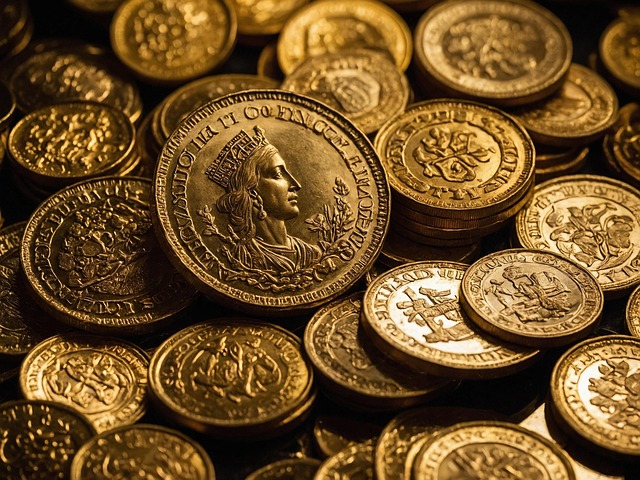
Let’s talk about gold. That shiny, yellow, indestructible metal that has caused more trouble throughout history than a teenager with a credit card. It’s launched a thousand ships, fueled countless conquests, and is the reason your eccentric uncle Dave has a bunker full of canned beans and Krugerrands.
In the world of investing, gold is the ultimate diva. It doesn’t produce anything, it doesn’t earn interest, and it just sits there, looking pretty. Stocks are the hardworking employees; bonds are the reliable, if boring, accountants. Gold? Gold is the celebrity guest who shows up, causes a scene, and either makes everyone rich or leaves the party in flames.
So, should you invite this diva into your financial portfolio? Let’s polish up our monocles and take a closer look.
Part 1: Why on Earth Would Anyone Buy This Stuff?
First, let’s understand the appeal. Why does this seemingly useless metal hold such sway over us?
1. The “Sky is Falling” Insurance Policy:
When the news starts sounding like a plot from a dystopian movie—inflation is soaring,governments are printing money like it’s Monopoly, and politicians are, well, being politicians—people run to gold. It’s the original “safe haven” asset. While paper currencies can be devalued, you can’t print more gold (unless you’re a medieval alchemist, and if you are, please call me). It’s a tangible thing you can hold, which is very comforting when your digital stock portfolio looks like it’s having a seizure.
2. The Ultimate Diversifier (Because It’s Kind of a Jerk):
Gold has a fascinating and often perverse relationship with the economy.When things are great, and stocks are soaring, gold often sulks in the corner. But when the stock market catches a cold, gold sometimes decides to throw a party. This low-to-negative correlation makes it a fantastic diversifier. It’s the friend who hates all your other friends, ensuring you’re never bored—or, in this case, completely wiped out.
3. The Inflation-Fighting Superhero (Sometimes):
Think of your cash in the bank as a ice cube.Over time, inflation is the sun that slowly melts it. Gold has historically been a decent hedge against this melt. While your dollar buys less bread, an ounce of gold has, over the very long term, retained its purchasing power. It’s not a perfect hedge year-to-year, but across decades, it’s held its own against the inflationary sun.
Part 2: How to Get Your Hands on the Glitter (Without Getting Mugged)
So, you’re convinced. You want a piece of the rock. How do you get it? You have more options than a king in a treasure vault.
1. The Pirate’s Method: Physical Gold
This is for those who have a genuine,deep-seated urge to stroke a gold bar and whisper “my precious.”
· Coins & Bullion (Eagle, Krugerrand, Maple Leaf): The classic choice. It’s tangible, it’s beautiful, and it makes you feel like a international financier. The downsides? You have to worry about storage (a safe isn’t cheap) and insurance. Also, the “bid-ask spread” (the difference between the buying and selling price) can be hefty. It’s like buying a new car; it loses a chunk of value the moment you drive it off the lot.
· Jewelry: While it’s gold, it’s a terrible investment. The craftsmanship markup is enormous. Buying jewelry for investment is like buying a Ferrari to get groceries—you’re paying for the art, not the utility.
2. The Accountant’s Method: Paper Gold
For those who like theidea of gold without the hassle of hiding it from fictional pirates.
· Gold ETFs (Like GLD): This is the most popular way. You buy a share of a fund that holds physical gold in a massive London vault. It’s as easy as buying a stock. You get the price exposure without having to build your own fortress. The cost? A small annual management fee.
· Gold Mining Stocks: You’re not buying the metal; you’re buying companies that dig it out of the ground. This is a leveraged bet on gold. If the gold price goes up, the miners’ profits can soar. But you’re also exposed to company-specific risks—like a mine collapsing, a government nationalizing assets, or the CEO deciding to hunt for unicorns instead. It’s more volatile than the metal itself.
· Futures and Options: This is the advanced class. Only for people who understand terms like “contango” and “margin call” and don’t break into a cold sweat upon hearing them. We’ll just smile and nod at this option.
Part 3: A Few Pieces of (Unvarnished) Advice
Before you mortgage your house for a gold brick, heed these words.
1. Don’t Go Full Gollum.
A little gold goes a long way.Most financial advisors suggest allocating only 5-10% of your total portfolio to it. It’s the hot sauce of your financial taco—too much, and you’ll ruin everything. It’s for insurance and diversification, not for making you the next Scrooge McDuck.
2. Timing is a Fool’s Game.
Trying to time the gold market is like trying to tell a cat what to do.It has its own mysterious agenda. The people on TV shouting “GOLD TO $10,000!” are usually the same ones selling you a newsletter. The best strategy is often “dollar-cost averaging”—buying a little bit at a time, regardless of the price. This smooths out the volatility and saves you from the heartache of buying at the very peak.
3. Remember, It’s a Rock.
Gold has no earnings,no dividends, and no cash flow. Its value is 100% based on what someone else is willing to pay for it. It’s a speculative asset rooted in collective emotion and fear. Unlike a growing company, it won’t innovate or expand. It will just sit there, being gloriously, stubbornly, gold.
The Bottom Line: To Gild or Not to Gild?
So, is gold a fool’s game or a savvy move? The answer, frustratingly, is yes.
It’s a fool’s game if you bet the farm on it, try to day-trade it based on conspiracy theories, or store it under your mattress where it can be stolen or mistaken for a fancy doorstop.
It’s a savvy move if you use it as a modest, long-term diversifier and an insurance policy against true economic chaos. It’s the financial equivalent of a fire extinguisher: you hope you never need it, but you’ll be profoundly grateful it’s there if the house catches fire.
Now, if you’ll excuse me, I need to check on my ETF and reassure my uncle Dave that the digital shares in my brokerage account are, in fact, “real.”