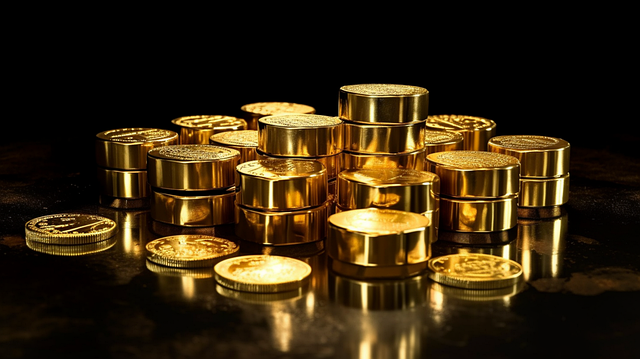
Let’s talk about gold. That shiny, yellow, indestructible metal that has been driving humans crazy with desire since a cavman first stumbled upon a nugget and thought, “Ooh, pretty!” It’s been the cause of rushes, the root of empires, and the standard by which we measure a truly successful pirate.
But in today’s world of crypto-kitties and AI-driven stock algorithms, does this ancient rock still have a place in your portfolio? Or is it just a fancy, inflation-proof paperweight?
Buckle up, dear reader. We’re about to dig into the glittering, and sometimes foolhardy, world of gold investment.
Part 1: Why Gold? The Case for the Original OG Asset
Before we had Bitcoin, we had gold. It’s the ultimate “OK, Boomer” of assets, and yet, it persists. Here’s why:
1. The Drama Queen Hedge: When the stock market throws a tantrum and everything is painted in a depressing shade of red, gold often stands there, gleaming smugly. It’s the ultimate “safe-haven” asset. Geopolitical tension? Pandemic? Economic meltdown? People run to gold. It’s the financial equivalent of hiding under a sturdy oak tree during a thunderstorm. It might not be the most exciting place, but you feel a lot safer than the guy flying a kite in a field.
2. The Inflation Slayer (Allegedly): The story goes like this: when central banks print money like they’re trying to win a Monopoly game, the value of your paper currency decreases. But gold? Gold can’t be printed. There’s only so much of it. So, while your dollar bill is buying you a single gumball, that same ounce of gold might still buy you a decent suit (or at least a very nice tie). It’s a store of value that has, over the very long term, kept pace with inflation.
3. It’s a Tangible Thing: In a digital world where your life savings can be represented by a line of code on a server, there’s something profoundly comforting about holding a gold coin. You can’t hack it. Your broker can’t accidentally click “delete” on it. It’s real. You can hold it, bite it (though dentists everywhere wince when you do), and hide it in a secret vault. It satisfies the inner dragon in all of us that just wants to sit on a pile of treasure.
Part 2: The “Fool’s Gold” Pitfalls: Every Rose Has its Thorn
Now, let’s pour some cold water on this golden shower of praise. Gold is not a perfect asset. It has more quirks than a British sitcom.
1. It’s a Lazy Asset: Unlike a stock that pays dividends or a bond that pays interest, gold is… well, it’s just gold. It just sits there. It doesn’t innovate, it doesn’t grow, it doesn’t produce anything. Warren Buffett famously pointed out that you could take all the gold in the world, melt it into a giant cube, and it would just sit there. You, on the other hand, would have to pay to guard it. This is the “carrying cost” – storage and insurance – which is like a negative dividend.
2. Volatility is its Middle Name: Don’t be fooled by the “safe-haven” talk. Gold’s price can be wildly volatile. It can have spectacular crashes and breathtaking rallies. It’s less a steady oak tree and more of a palm tree in a hurricane—it might not break, but it’s going to swing wildly.
3. The Emotional Rollercoaster: Investing in gold can turn you into a conspiracy theorist. You’ll start rooting for bad news. A little part of you will secretly hope for economic collapse just to see your gold holdings moon. It’s a dark path, my friend.
Part 3: How to Get Your Hands on the Glitter: A Buyer’s Guide
So, you’re still interested? Good. Here are the main ways to get exposure, from the caveman method to the space-age.
1. The Pirate’s Method: Physical Gold (Coins & Bars)
· Pros: Ultimate safety. You own it. No counter-party risk. Maximum satisfaction for your inner Smaug.
· Cons: Storage and insurance headaches. High markups (the “dealer premium”). Hard to sell quickly in large quantities without taking a price hit. Also, you have to resist the urge to bury it in your backyard and draw a treasure map.
2. The Paper Pusher’s Method: Gold ETFs (like GLD)
· Pros: Incredibly easy. You buy and sell it like a stock in your brokerage account. No need for a home safe. High liquidity.
· Cons: You don’t own the physical gold. You own a paper claim on it. There are annual fees (expense ratios). In a true Mad Max scenario, your ETF shares might not be worth much, but then again, you’ll probably have bigger problems.
3. The Gambler’s Method: Gold Miner Stocks
· Pros: Leveraged play on the gold price. If gold goes up 10%, a good miner’s stock might go up 30%. They can also pay dividends.
· Cons: You’re not just betting on gold; you’re betting on a company. Bad management, a mining disaster, or political issues in the country of operation can sink the stock even if the gold price is rising. It’s like betting on the jockey, not just the horse.
4. The Modern Alchemist’s Method: Digital Gold (e.g., PAXG)
· Pros: Each token is backed by one fine troy ounce of a London Good Delivery gold bar, stored in a vault. You get the tangibility of gold with the ease of a cryptocurrency.
· Cons: You need to understand crypto wallets and exchanges. It’s a relatively new and unproven system for many.
Part 4: The Grand Strategy: So, What’s a Smart Investor to Do?
Here’s the brass tacks (or should I say, gold tacks?).
1. Think of it as Insurance, Not a Growth Stock. Allocate a small portion of your portfolio to gold—say, 5-10%. This isn’t the part you’re counting on to get rich. This is the part that sleeps in the guest room, ready to save the day when the rest of your portfolio is on fire. Rebalance annually. If your gold allocation grows to 15% because of a crisis, sell some and buy the depressed stocks. That’s the whole point!
2. Don’t Try to Time the Market. The people who claim to know where the price of gold is going next week are the same people who sell you crystal balls. Use dollar-cost averaging. Buy a little bit each month, regardless of the price. It smooths out the volatility.
3. Choose Your Vehicle Wisely. For 99% of people, a low-cost Gold ETF like GLD or IAU is the most sensible option. It’s cheap, liquid, and you don’t have to worry about your gold falling through the floorboards.
The Final, Glittering Verdict
Gold is not “fool’s gold,” but it’s also not a magic wealth generator. It’s a primitive, emotional, and stubbornly persistent asset that serves a specific purpose: diversification and insurance.
In the grand portfolio of your life, your stocks are the growth engine, your bonds are the shock absorbers, and your gold is the emergency parachute. You hope you never need it, but you’ll be profoundly grateful it’s there if the plane starts going down.
So, go ahead. Add a little glitter to your portfolio. Just don’t bet the whole farm on it. After all, you can’t eat gold—though it would probably make for a very expensive and unsatisfilling meal.
Now, if you’ll excuse me, I need to go check on my safe. And my treasure map.